
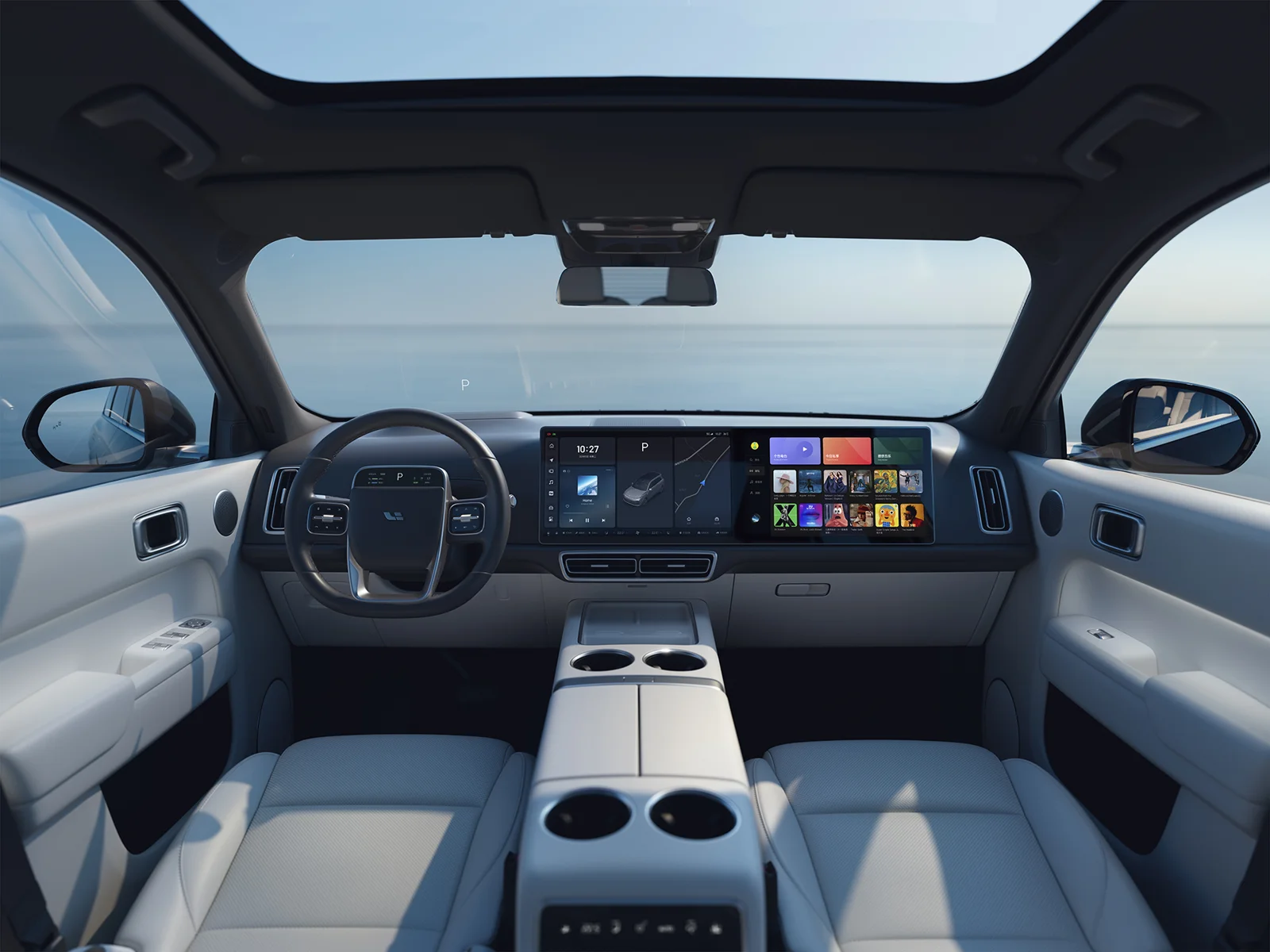
Fix the passenger arrangement for the demonstration
List the required occupied positions and the passengers’ practical seating needs. Identify the offered L9 version and actual seating configuration. Do not substitute a photograph with folded or moved seats for a demonstration of the arrangement the buyer needs during normal family travel.
The three-row cabin guide provides the wider seating review. Where child restraints are involved, use the exact restraint and vehicle instructions with appropriate qualified advice. A luggage fit test cannot certify a restraint installation or justify compromising a passenger position to create additional storage.
Measure the real luggage
Ask for dimensions of rigid cases, pushchairs and other bulky equipment, including protruding wheels and handles. Separate items that can be rearranged from those that must retain their shape. A general request for holiday luggage may produce an attractive but irrelevant demonstration using much smaller bags.
If the supplier uses substitutes, record their dimensions and arrangement. An empty load-area photograph can help establish shape but does not show whether the intended items fit together. The customer should know precisely what was tested before using the result to choose between an L9 candidate and another vehicle.
Check the opening and usable space
Request measurements at the relevant restrictive points, not only the widest floor span. Include the loading opening and any internal shape that limits access. A case may fit on the floor in theory but still be awkward to pass through the opening or position without moving another required item.
Keep the normal passenger arrangement during this check. Do not assume every advertised storage area is usable for the customer’s purpose. Follow the vehicle’s loading and securing guidance, and have practical concerns reviewed appropriately rather than treating a densely packed photograph as proof of a suitable travelling setup.
Include retrieval during a journey
Ask which items the family must reach during ordinary stops. A pushchair that can only be removed after unloading all cases may be inconvenient even if everything fits. The practical outcome should describe access as well as total capacity, particularly for frequent airport, school or family travel.
The rear-cabin equipment review helps keep other passenger requirements visible. A family may value easy access to controls or stored items as much as the maximum packed volume. Record those preferences separately so the supplier can demonstrate a layout that addresses the customer’s actual priorities.
Consider the loading location
Discuss the customer’s parking bay, available space behind the vehicle and any overhead obstruction relevant to loading. Confirm the applicable dimensions and fitted tailgate functions for the actual version. A convenient demonstration in an open yard does not establish access in a restricted home parking space.
Where the local fit remains uncertain, request the measurements needed for a separate property check. Do not promise that a particular tailgate setting or parking feature will overcome every clearance problem. The buyer should know which part of the assessment has been demonstrated and which depends on their own location.
Record condition and supplied accessories
Inspect relevant trim, seat mechanisms and luggage-area equipment within an appropriate vehicle review. Disclose damage or modifications that affect the arrangement. A tidy presentation does not establish that every mechanism operates correctly, and a missing removable item can change the load area the customer expects to receive.
The handover file should name included covers, mats and other agreed accessories. Clarify whether anything used for the demonstration is temporary. Recheck the arrangement if preparation or a substituted vehicle changes the seats, floor or supplied items before the purchase is finalised.
Decide using the normal trip, not an exceptional photograph
Consider a customer who always needs six occupied positions and several rigid cases against one who occasionally folds a seat for equipment. Their useful capacity comparisons differ. Do not allow the second arrangement to stand in for the first merely because it produces a larger-looking load area in photographs.
Send Panda the destination, accepted L9 versions, new or used preference and the passenger-plus-luggage requirement. Ask for a traceable demonstration and state which constraints are mandatory. The final decision should reflect everyday usability, with the actual arrangement retained in the offer rather than an unsupported claim that the larger SUV fits every family’s luggage.