
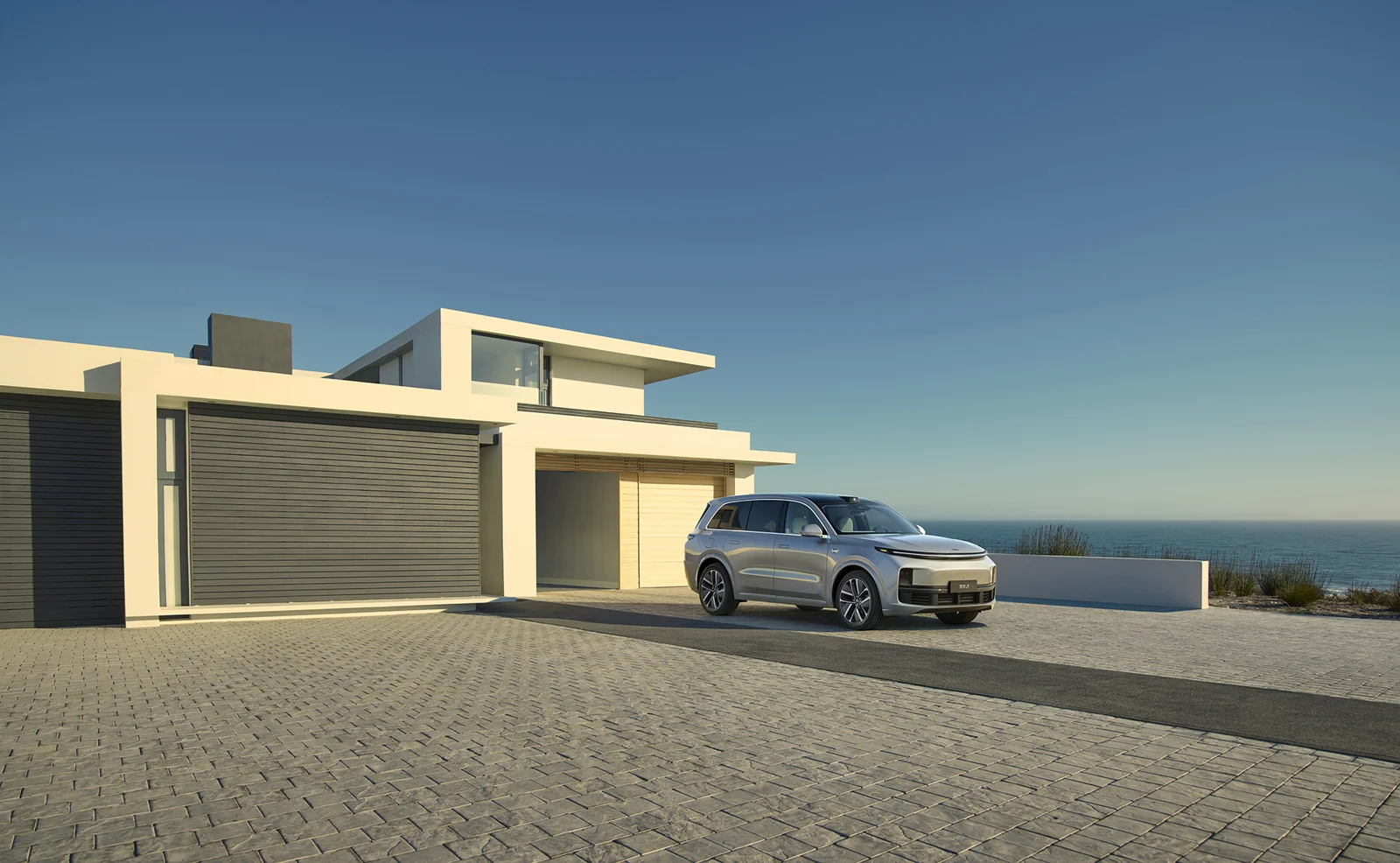
Match published dimensions to the offered car
Identify the vehicle’s production period and applicable manufacturer information. Keep the original 2022 body dimensions attached to that reference rather than presenting them as one permanent specification for the model name. Later cars need their own verified measurements and equipment record, especially if accessories or modifications affect the space required.
The L9 year and version guide provides the chronological context. Ask how a quoted width or height was measured and whether the particular garage concern is included. Do not assume a body-width figure establishes the clearance needed at the mirrors, or that a roof attachment leaves the total height unchanged. State the actual measurement required rather than filling gaps with an estimate.
Measure the whole entrance route
Record the narrowest entry, gate posts, bends, ramp and overhead restrictions before measuring the final parking bay. A sufficiently large space can still be inaccessible through an awkward approach. Include fixed objects at the relevant heights rather than relying on one floor-level width. Ask the property operator for any operating restrictions that affect access.
A simple plan with photographs and clear measurement points is useful for a remote review, but a cautious physical assessment may still be required. Keep slopes, changing levels and protrusions in view. Do not use a brochure turning description as proof that the driver can negotiate every entrance. The assessment needs the actual route and appropriately safe conditions, with any untested manoeuvre left visible.
Allow space for people after parking
Measure where the driver and passengers need to open doors, step out and assist children or other occupants. A car that can be parked between two walls may not provide usable daily access once a door is opened. Include nearby parked vehicles or pillars if they regularly occupy the same position, rather than demonstrating the space only when it is unusually empty.
The passenger-access review brings seating needs into this question. If children use installed restraints, consider the checked arrangement and the person helping them. Keep any side step or other accessory in the actual equipment record. Do not promise comfortable access from length and width alone when the family’s door-opening requirement has not been assessed.
Check the tailgate and ordinary loading task
Establish overhead and rear clearance for normal tailgate use under the relevant vehicle instructions. A closed vehicle height does not answer the height reached by an open tailgate. Inspect the actual operating arrangement and any applicable settings rather than assuming a useful stop position from another L9 demonstration. Keep people and obstacles clear during assessment.
Use the luggage-fit guide to include the items normally loaded in that parking space. A pushchair fitting inside the compartment does not prove it can be conveniently lifted through the opening when the car is close to a wall. Assess the loading position and the required passenger seats together. This gives the buyer a daily-use answer rather than a mathematical fit for the closed car.
Assess visibility and parking equipment separately
Ask which cameras, sensors and assistance functions are fitted and demonstrated on the candidate. Check useful views in ordinary operation and record relevant warnings or limitations. A camera can assist the driver’s assessment, but its presence should not become a guarantee that the vehicle will clear every obstacle or park automatically in the customer’s particular space.
The connected and driving-function review distinguishes equipment from supported functions and regional dependencies. Keep responsibility for the manoeuvre with the driver and use the applicable instructions. Do not stage a close-clearance test to prove a feature. Where the route or function cannot be appropriately assessed, document the limitation and plan a suitable supervised review before relying on it.
Compare candidates using the same real space
Give sellers the same entry measurements, required access and loading arrangement. Request verified dimensions and applicable equipment information for each candidate. A later version, different accessory set or alternative wheel package should remain visible where it affects the assessment. If the original offer is replaced, reconsider any measurement that depended on that configuration.
For a restricted garage, make successful assessment of the practical route and access an explicit buying condition where necessary. A new-car offer and a used-car offer can share that requirement while having different condition checks. The useful outcome is a recorded fit for the actual vehicle and daily routine, with unverified areas identified, rather than an unconditional yes based only on three historic body dimensions.
Relevant references: Li Auto: 2022 L9 body dimensions. Keep these within their stated market and date; verify the selected vehicle separately.