
Define the regular longer journey
Ask which trips recur, who normally travels and what changes on the limiting occasion. A rare exceptional outing should not become the only comparison unless it is an essential requirement. The passenger framework retains the normal front settings and places that must remain occupied through the actual journey.
Describe the time and stop routine the buyer accepts instead of designing an ideal route to favour one advertised figure. Keep personal comfort and access questions distinct from operating distance. A family may accept a replenishment stop while still needing a particular adult position, and a generous cabin demonstration may leave the ordinary route plan unconfirmed.
Keep passenger positions consistent
Assess required adults and applicable child arrangements under the relevant instructions, with the same front and second-row settings through the review. The adult rear-place assessment helps keep combined fit explicit. Do not approve several passengers from separate favourable photographs that use incompatible seat positions.
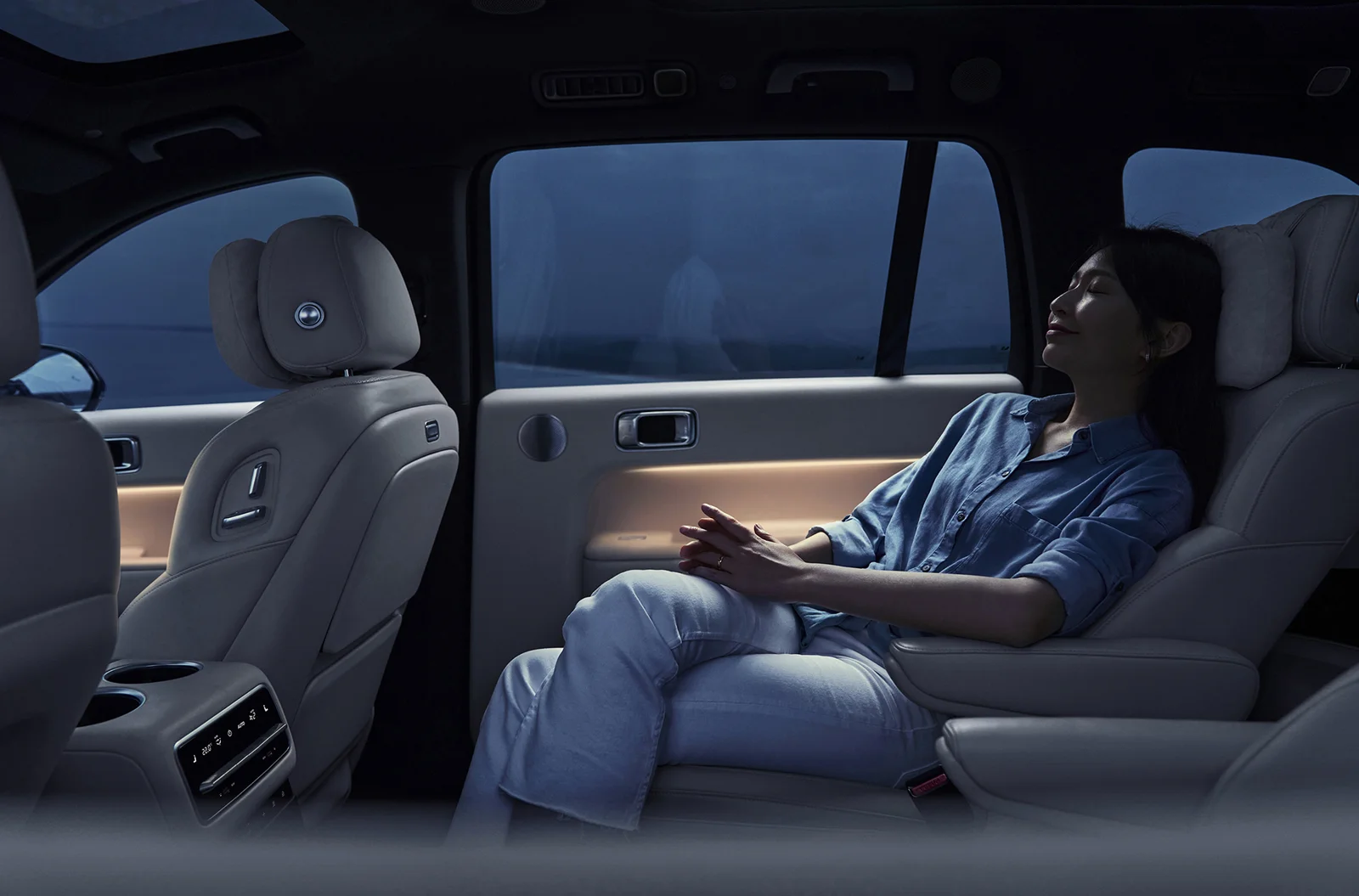
Where the actual people are absent, retain the personal-fit limitation. A short remote observation can document space or movement without establishing sustained comfort for every journey duration. Avoid treating a preferred relaxed showroom position as permission for every travel setting. The supported passenger arrangement should remain clear alongside any comfort function the buyer values.
Load and retrieve the normal baggage
The seats-in-use loading review applies the actual bags while required places remain occupied. Retain what was represented and any item still untested. A folded area may be useful for another trip but cannot prove this full family arrangement, while an empty boot figure says little about retrieving the bag needed at a stop.
Ask which items need ordinary access during the journey and how the buyer will load them in representative parking. Normal closure and suitable luggage restraint remain relevant. If an accessory arrangement is proposed, use the addition decision for its separate supported limits rather than assuming an attractive roof or cabin accessory photograph supplies usable capacity for every version.
Build a supported replenishment routine
The operating and service guide keeps charging and the additional system within the actual plan. Identify compatible equipment, usable access and the alternative when a preferred stop is unavailable. A nearby map marker or supplied connector cannot establish all of those questions for the proposed candidate and intended route.
Keep combined and battery-only references within their stated contexts instead of comparing them as one uniform distance promise. The charging-session evidence shows why one peak figure is not the whole stop. Record the observed setup and limits; the buyer's loaded journey, weather and access conditions should not be guaranteed from a demonstration made elsewhere.
Retain condition and support alongside planning
Obtain relevant current findings and service records for a used proposal, or supported status and pre-delivery scope for a new one. A practical route plan cannot certify the car's battery or other systems. The maintenance record review connects completed work with the candidate rather than relying on a general reassurance about the model.
Ask the receiving provider about assessed needs and keep any unresolved remedy visible before acceptance. Do not promise that a preferred itinerary guarantees support everywhere it passes. Retain the useful prepared vehicle scope independently of the operating assumptions, so an attractive long-trip story does not quietly approve incomplete work or a substitution with unreviewed condition.
A family trip with one limiting load
Suppose the usual journey works with the normal bags, but a recurring holiday adds a bulky item and keeps every required place occupied. Assess that item in the same arrangement, then consider supported alternatives the buyer accepts. Folding an essential passenger place is a changed task, not proof that the original request is met.
Record the accepted seating, loading and stop routine with its evidence limits. If another candidate is proposed, repeat the relevant configuration, passenger and condition questions. A similar combined-range description should not carry approval across to a vehicle whose actual equipment, preparation or service arrangement differs from the one the family assessed.
Choose the next action
| Finding or requirement | Purchase response |
|---|---|
| Reference distance dominates the choice | Keep occupied fit, baggage and practical stops in the same plan. |
| A recurring load was not represented | Assess it or retain the requirement pending before acceptance. |
| One favourable session is supplied | Record its setup and limits rather than guaranteeing every family journey. |
Questions buyers ask
Does a combined-range claim prove a complete trip plan?
No. Assess compatible access, accepted stops, passengers and individual condition.
Can empty-vehicle luggage images answer a full family journey?
No. Keep the required places occupied and the actual load identified.
Manufacturer context: 2022 L9 introduction, 2024 L-series update, and May 2026 L9 announcement (PDF). The actual offer requires its own specification and condition evidence.