
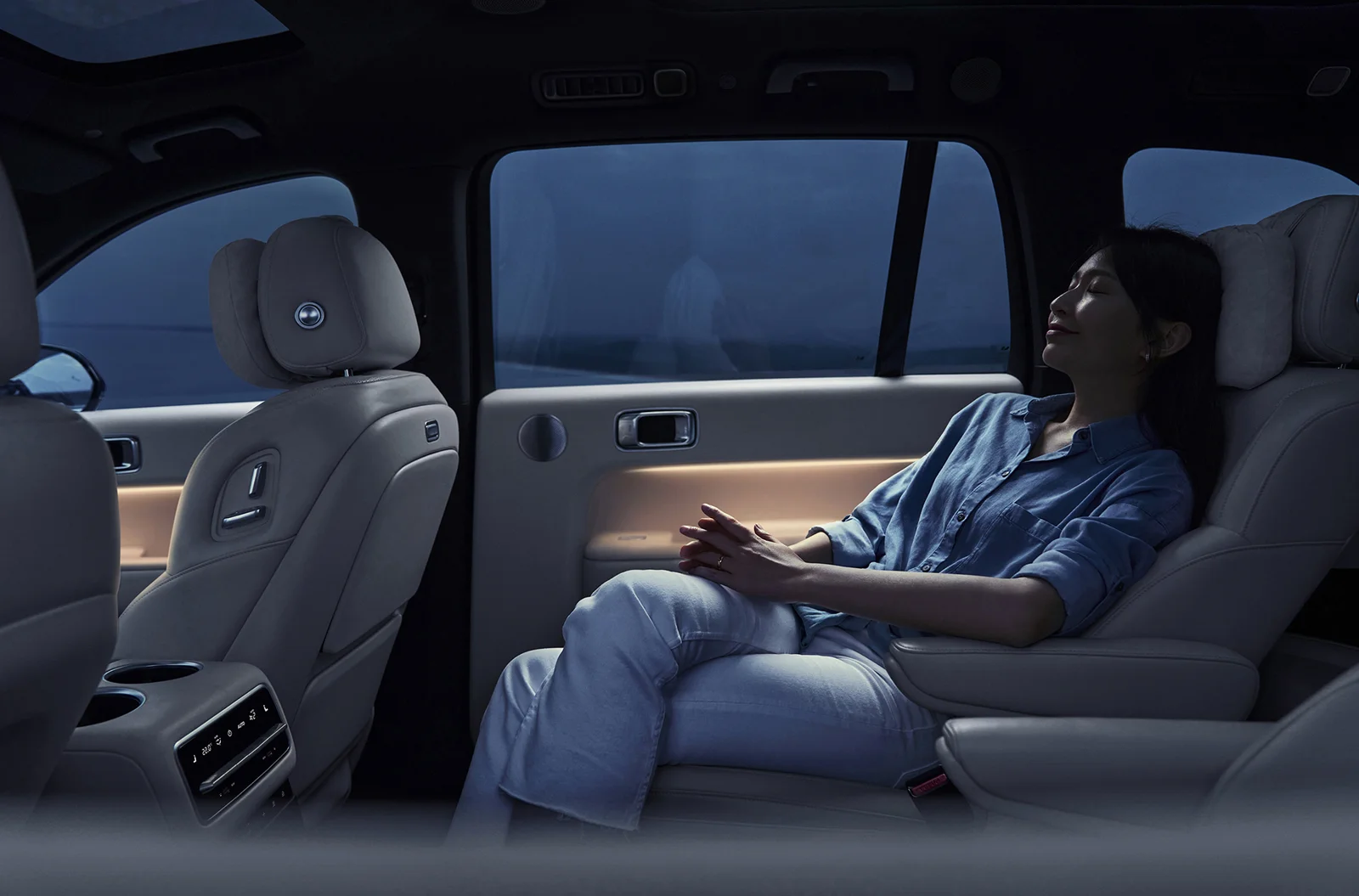
Describe the recurring adult journey
Record who uses the third row, how often and what the normal trip involves. Occasional flexibility is a different priority from a place occupied on every family outing. The complete passenger arrangement keeps all required users visible, including the driver and second-row occupants whose normal positions affect the remaining room.
A height figure alone cannot establish a person's fit. Posture, access needs and preferred position also matter. If the actual adult cannot assess the car, describe the representative observations and their limits rather than offering a universal comfort promise. The buyer should know which personal question remains open before accepting the candidate for regular use.
Hold the other positions constant
Set the front seats for their normal users and retain the second-row arrangement through the demonstration. Do not create a favourable third-row photograph by moving another essential occupant into an unsuitable position. The second-row value review helps distinguish a wanted adjustment from a setting that cannot coexist with the full journey.
Use matching setups across alternatives, with clear media of the actual candidate. Record what was achieved rather than treating separate photographs as evidence that every passenger fits simultaneously. A car may offer several individually attractive positions yet leave a combined arrangement unresolved. That is a practical purchase question, not something a long equipment list can answer on its own.
Observe access as well as sitting
Ask how the regular user enters and leaves, with the relevant seats and occupied places arranged according to the applicable instructions. A seated photograph does not show the movement required to reach the position. Retain any unrepresented access task, especially when remote demonstrations use a different person or an unusually convenient setup.
Do not recommend improvising passenger restraints or bypassing equipment to create an easier route. Where the customer's intended arrangement involves children as well, use the approved restraint-position review for its separate instruction-led questions. Access convenience and a suitable fitted restraint are related requirements, but one favourable observation cannot establish the other.
Include the real bags and retrieval routine
The occupied-place loading review keeps required passenger places in use while the actual baggage is assessed. A folded third-row image answers another task. If the normal bags cannot be represented, retain that part of the decision pending instead of assuming that a visually generous boot will accommodate everything needed on the regular journey.
Consider retrieval at a normal stop as well as initial loading. The buyer may need access to a particular case without disturbing the full arrangement. Record a useful completed task and any accepted inconvenience rather than a broad capacity claim. Normal closure and appropriate restraint of luggage remain relevant; an attractive loosely arranged photo is not proof of the entire journey setup.
Keep current seat condition visible
Retain applicable equipment records, ordinary control demonstrations and relevant condition findings for the offered car. A tidy third row cannot establish all operating or repair history, and working adjustment alone is not a complete passenger-area inspection. Ask for suitable assessment when a reported issue affects the required function or confidence in the area.
For incomplete preparation, preserve the supported remedy and completed evidence needed before acceptance. Do not assign a generic discount to an unresolved personal-fit or condition issue. The handover file should retain the actual arrangement, supplied items and findings, rather than allowing an appealing six-seat badge to replace the customer's supported passenger requirement.
Two adults need the rear places regularly
Suppose the buyer expects adults in the third row on weekly journeys. Assess their access and positions while the other users keep normal settings, then add the regular bags. If a preferred second-row setting has to change, ask whether that concession is acceptable rather than silently describing all the positions as equally comfortable.
If the arrangement works only for occasional use, keep the changed requirement explicit. A different candidate can be considered without promising that every larger or newer version fixes the problem. Preserve observations and personal limits in the decision; a substitute unit with different equipment or condition needs its own relevant passenger review.
Choose the next action
| Finding or requirement | Purchase response |
|---|---|
| Third-row places are used regularly | Assess actual adults with normal settings ahead and representative journey needs. |
| Demonstrations use different seating positions | Reconcile one simultaneous occupied arrangement before acceptance. |
| Bags require a needed place to fold | Record an unmet journey requirement or a customer-approved alternative. |
Questions buyers ask
Does six-seat wording prove adult third-row comfort?
No. Assess the actual person, positions, access and recurring journey.
Can remote media settle every personal-fit question?
No. Keep what was represented and what remains untested explicit.
Manufacturer context: 2022 L9 introduction, 2024 L-series update, and May 2026 L9 announcement (PDF). The actual offer requires its own specification and condition evidence.