
Define both driving-position requirements
Ask who regularly drives and what each user needs from the position, access and visibility. Do not assume that similar height means identical fit or that the taller driver's result settles the other person's preference. The occupied cabin framework keeps any required passengers behind the front seats within the shared-use brief.
Keep the normal driving task distinct from a showroom posture chosen to maximise one clearance. Where a driver is absent, retain the untested personal question rather than treating another person's comfortable position as proof. A remotely promising candidate can remain under consideration without making a universal fit claim that its equipment records or current photographs cannot support.
Identify the actual adjustment and recall arrangement
Use the period-specific identity review and original configuration evidence for the offered unit. Do not assume that every memory description covers the same seat, mirror or account behaviour. Ask which relevant adjustments are supported and what ordinary changeover the seller can actually demonstrate with the selected car.
Retain fitted presence and operation separately. A familiar button, menu or profile name does not establish every function available to the receiving users. The account and function review keeps any setup or transfer dependency visible, so a successful recall under the seller's arrangement is not silently expanded into a guarantee for every future driver and account.
Keep passengers in each driver's assessment
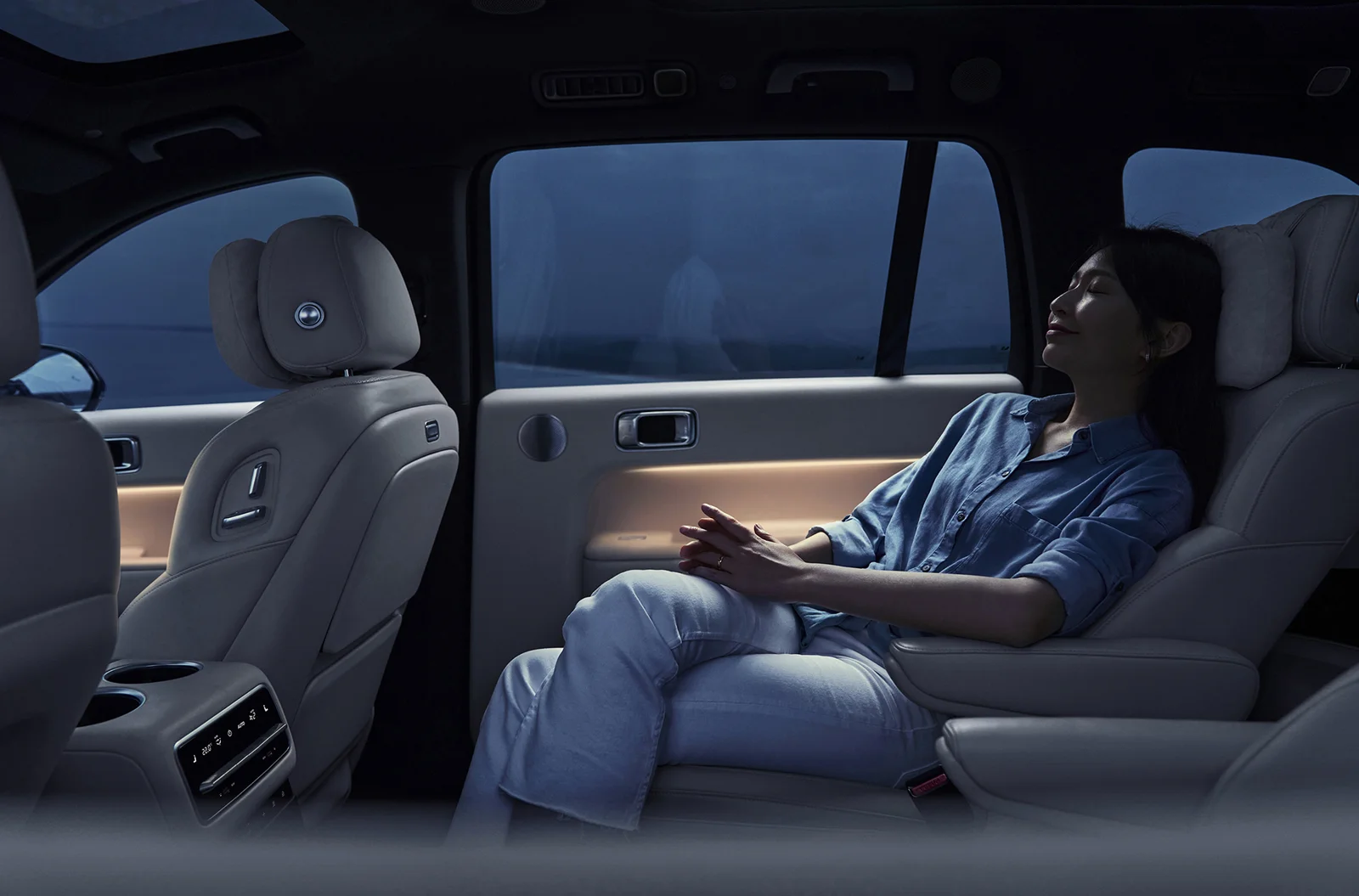
Set the front position for each regular user, then examine the rear arrangement required during that person's journeys. The third-row adult decision supports the combined task. Do not approve the front and rear places from incompatible media in which the driver is moved forward solely to create a favourable passenger view.
Record which adjustment changes are acceptable and who travels in each routine. A car may work well for one driver's solo trip yet leave the family's full arrangement unanswered when the other driver takes over. That difference should be a useful part of the decision, rather than being hidden behind a general large-cabin description or a long list of convenience features.
Test the practical changeover routine
Ask how the users intend to swap, including any manual adjustment they accept when a preferred recall method is unavailable. Demonstrate relevant controls ordinarily and retain the setup. A successful single movement does not prove every stored position, transfer method or connected feature, but it can answer a specific task when its limitations are explicit.
Keep useful convenience separate from an essential achievable driving position. If both users can adjust comfortably but need a few manual steps, ask whether the premium for a different routine matters in their actual frequency of use. If one cannot achieve the needed position, unrelated extras cannot silently compensate for that limitation without changing the customer's requirement.
Review condition and agreed preparation
Retain seat and control findings, disclosed work and appropriate examination of a reported concern. Successful recall is not a full electrical or mechanism assessment. Equally, a clean seat surface cannot establish that every wanted function works, and a future seller promise should remain distinct from the condition supported by the current evidence.
The handover file should preserve the accepted setup, supplied keys or other relevant items and completed preparation. Compare the useful arrangement at equivalent commercial scope rather than giving every memory feature an invented standard value. A replacement unit with a similar trim name needs its own control and position observations before it inherits the two drivers' approval.
Different drivers carry different passengers
Suppose one driver usually travels alone while the other regularly carries adults behind the front seats. Assess both normal positions and the full occupied arrangement for the relevant trips. A seat setting that suits the solo routine may not demonstrate that the second user's family journey works, even though the adjustment mechanism itself operates normally.
Retain the achieved positions, supported changeover and any accepted manual alternative. The second-row equipment decision can clarify a rear-seat concession separately. If the actual occupants have not evaluated the candidate, keep that limitation visible rather than declaring the shared-driver purchase complete from one convenient demonstration.
Choose the next action
| Finding or requirement | Purchase response |
|---|---|
| Drivers need different positions | Assess each actual user rather than transferring one person's fit result. |
| Recall depends on a current setup | Retain the demonstrated method and resolve receiving-user access. |
| Rear room changes with the driver | Review the relevant occupied journey under each normal front position. |
Questions buyers ask
Does memory prove both drivers can fit comfortably?
No. Assess their actual positions and access independently.
Can rear-space photographs use different front settings?
They can illustrate different tasks, but cannot prove one simultaneous occupied arrangement.
Manufacturer context: 2022 L9 introduction, 2024 L-series update, and May 2026 L9 announcement (PDF). The actual offer requires its own specification and condition evidence.